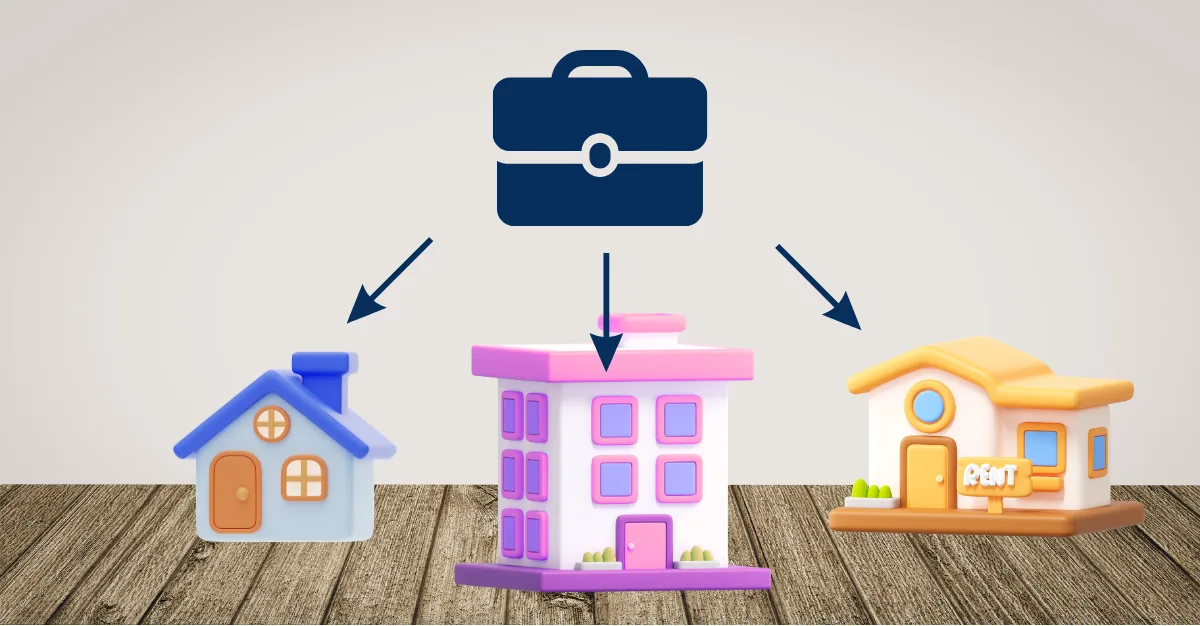
When do you need a new entity, and when can you use an existing one that you already have? It’s a question that comes up quite a bit, and the answer really depends on the situation.
There are a few common scenarios where it makes sense to create a new entity, and a few where it’s perfectly fine to continue using one you already have.
When a New Entity is Typically Required
Anytime you’re purchasing a large property, having a brand new entity is usually going to be necessary. In many cases, the lender will require it.
The reason is simple. Larger properties carry more potential liability, and lenders want to see that risk contained within a separate entity. That way, the exposure is limited to that specific investment.
Another situation where a new entity makes sense is when you are taking on something that carries higher risk.
For example, if you are buying a building and converting it into a subsidized housing project, that can open up additional liabilities. In a case like that, it’s better to isolate the risk by placing the property in its own entity.
When You Can Use an Existing Entity
There are also situations where creating a new entity every time doesn’t make sense.
If you are actively buying and selling properties, such as wholesaling or flipping houses, you may want to operate through a small number of existing entities. Constantly creating and dissolving entities for each transaction can become inefficient.
Using a few established entities allows you to continue doing deals without the administrative burden of starting fresh every time.
Another example is when you are purchasing a few smaller properties. In those cases, it can be reasonable to group them together under one entity for the sake of simplicity, especially when it comes to bookkeeping.
The key is to make sure you are properly protected. Having a strong liability policy or an umbrella insurance policy in place can help cover you if issues arise.
Structuring Entities for Partnerships
Partnerships introduce another layer of consideration.
If you are partnering with someone to buy a larger property, you may not plan to stay partners forever. That’s where it becomes important to think about your exit strategy ahead of time.
A common issue comes up when one partner wants to do a 1031 exchange and the other does not. Since a 1031 exchange requires the same entity to be both the buyer and the seller, this can create complications.
One way to avoid that problem is to structure the ownership differently from the beginning. Each partner can hold their ownership through their own separate entity. Those entities can then take title together, either as joint tenants or tenants in common.
This allows each investor to maintain flexibility later on. If one partner wants to do a 1031 exchange and the other does not, they can proceed independently without creating issues for the transaction.
Final Thoughts
Deciding whether to create a new entity or use an existing one depends on the size of the property, the level of risk involved, and how you plan to operate or exit the investment. Larger or higher-risk projects often call for a new entity, while smaller or more frequent transactions can sometimes be handled within an existing structure.
Many investors we work with appreciate our guidance on all aspects of real estate ownership and investing. If you are looking for investment opportunities in Pennsylvania or Maryland, reach out to us. We are always happy to help you think through your next move.